

Demand for ground source heat pump (GSHP) systems keeps climbing, yet the pool of qualified installers has not kept pace. You see the gap every time a project stalls because no local crew can design, drill, or commission the loop. Geothermal workforce development now sits near the top of the industry's priority list, and real solutions are taking shape.
The International Ground Source Heat Pump Association (IGSHPA) has spent decades training the professionals who make every installation succeed. You'll find out what's driving the installer shortage and why the gap matters for your projects and your business. You'll also see how training, certification, and industry partnerships are building a stronger pipeline of skilled workers.
How Geothermal Workforce Development Is Closing the GSHP Installer Gap
The GSHP installer shortage stems from rising demand and the specialized design, drilling, and loop skills few workers have yet. To close the gap, IGSHPA and its partners offer job-specific training and certifications built on the binational C448 standard. States, provinces, and utilities are also adopting these credentials as benchmarks, which helps a qualified workforce grow faster.
Why the GSHP Installer Shortage Keeps Growing
You feel the pressure when GSHP projects compete for the same small pool of qualified designers and crews. Utilities, school districts, and developers are pursuing more ground loop projects, including shared thermal energy networks (TENs). Meanwhile, federal and state decarbonization programs are adding demand, and the certified workforce has struggled to keep pace.
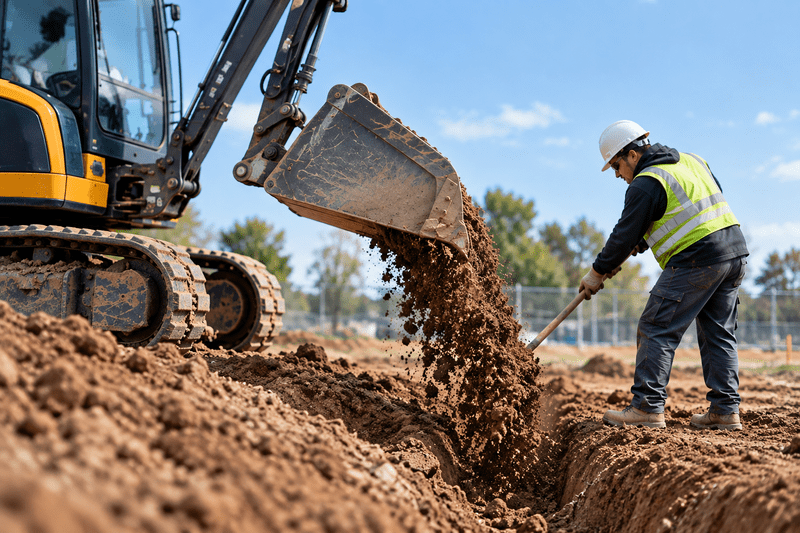
Ground loop work also demands skills that traditional heating, ventilation, and air conditioning (HVAC) training rarely covers. For example, your crews need to understand borehole drilling, grouting, pipe fusion, pressure testing, and flushing requirements. Similarly, drillers who come from water well or geotechnical work must adapt their methods to closed loop installations.
Research confirms the problem extends beyond North America and affects every role on a ground source project. According to Energy Research & Social Science, too few trained designers, installers, and drillers are slowing deployment in Britain.
The shortage affects you directly, because every unqualified installation risks poor performance and damages confidence in the technology. Owners and utilities also hesitate to commit when they cannot find certified professionals near their projects. As a result, geothermal workforce development has shifted from a long-term goal into an immediate business need.
How Training Strengthens Geothermal Workforce Development
Training gives your team a clear, standards-based path into ground source work without guesswork on the job site. IGSHPA partners with CSA Group on accredited courses built around the 2025 edition of the C448 design and installation standard. Instead of one broad course, the curriculum breaks into job-specific modules so you can train each person for their role.

- The GSHP Residential Installation Technician (GRIT) certificate prepares your crews to install residential systems to current standards.
- Drillers and excavators can earn the Ground Heat Exchanger Installer (GHXI) certificate for residential and light commercial loops.
- Service technicians can pursue the GSHP Residential Service Technician (GRST) certificate to troubleshoot and maintain systems with confidence.
- Inspectors and project managers can complete the fully online GSHP System Verification and Inspection (GSVI) course at their own pace.
- Designers can work toward the GSHP Commercial System Designer (GCSD) or GSHP Residential System Designer (GRSD) certification.
Plus, the free Geo 101 online course gives new hires and trade school students an easy starting point. Educators can also use these modules to align classroom programs with geothermal workforce development goals in their region.
Each credential signals to owners, utilities, and incentive programs that your team follows accepted industry practices. Furthermore, IGSHPA members gain access to training resources that help you certify more people across your company.
Industry Partnerships Driving Geothermal Workforce Development
Training alone cannot close the gap, so IGSHPA works with governments, utilities, and allied organizations to scale results. States and Canadian provinces are increasingly adopting IGSHPA training as a quality benchmark for their incentive programs. When your team holds these credentials, you're better positioned for projects tied to those programs.
IGSHPA also belongs to the Geothermal Market Capacity Coalition (GMCC), which unites trade groups, drillers, installers, manufacturers, and educators. The coalition supports training centers that help drillers and installers build the skills that growing markets demand.
Beyond formal courses, IGSHPA's Town Hall and monthly Dig Deeper webinars keep working professionals current on new practices. Likewise, the IGSHPA Annual Conference on September 20 to 22, 2027, connects you with trainers, peers, and industry leaders. Together, these efforts give your company more ways to recruit, train, and retain skilled people over time.
Your participation matters, because industry-wide progress depends on companies that invest in their people. Every certified employee you add strengthens geothermal workforce development in your local market and across the industry. Consequently, your company earns a stronger reputation with owners, utilities, and the design teams that specify ground source systems.
Build Your Team's Future With IGSHPA Training
The GSHP installer shortage is real, but you have proven tools to build a qualified team. IGSHPA training, certification, and membership give your company a direct role in geothermal workforce development. Each credential your employees earn positions your company for new projects, programs, and partnerships across the ground source industry.
Start by exploring the training and certification programs that match each role on your team. Next, consider a business membership so your company appears in the IGSHPA directory and stays connected to industry updates. Reach out to the IGSHPA team today to find the right training path for your crews.